

Decoding The Dread
Identifying the internal mechanisms that turn external volatility into personal exhaustion

📌 Please like, comment, and share this post if you find it of value. This helps more of our civic neighbours find their way to it.
Dear friends
Today I’d like to begin unpacking a simple but powerful psychological approach to help us keep our footing and find the stamina to remain steady — and even compassionate — despite the weight of what’s happening around us.
It is a common misunderstanding that our emotions arise as a direct result of the things that happen to us. How many times have we blamed a neighbour who voted for Trump for our anger, or a sharp retort from an ally for our sense of inadequacy, and even a withdrawal? We seem to believe that there’s a straight line between the external world and our internal state — a simple cause and effect that leaves us at the mercy of our circumstances.
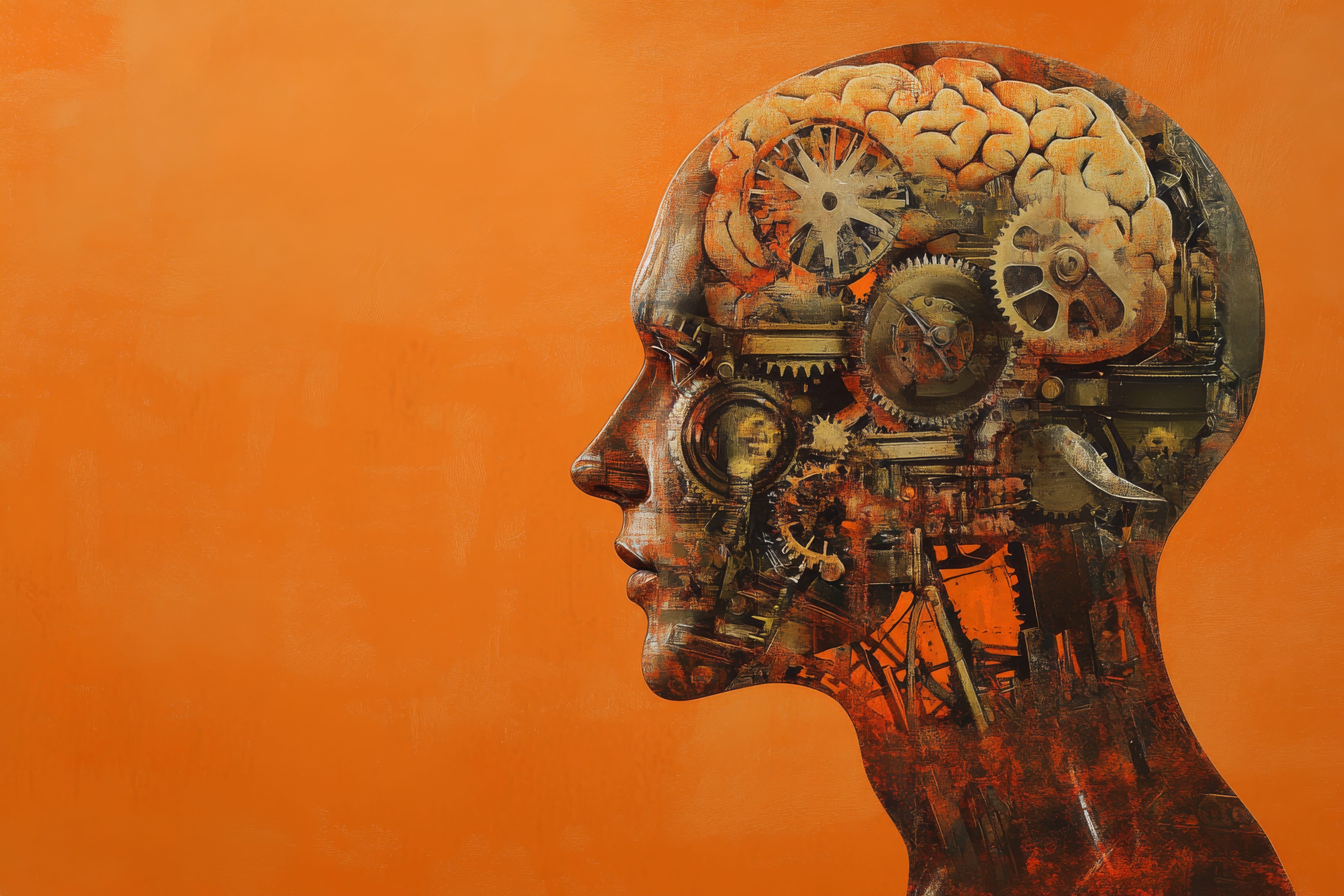
In reality however, there is a vital — and generally invisible — step tucked between the event and our emotional response. Our minds instantly filter whatever’s happening around us through a lens of personal beliefs, past experiences, and ingrained assumptions to give us a sense of meaning. The reality is that many events are themselves neutral until they pass through the filter of our own minds. Most often, it is not the event itself that generates the feeling, but rather the specific meaning we assign to the event.
The ABC Model
We can look at this through a framework called the ABC model, which is often used in cognitive therapy. The model matches an ancient Stoic philosophy: it isn’t the facts that upset us, but rather the way we view those facts. If we imagine a sequence where A is the activating event and C stands for the Consequences, which are the emotions we feel and the ways we subsequently behave, we generally overlook B — our beliefs.
Imagine you are a woman alone in her home at night, who is woken suddenly by a loud noise in the hallway. You feel intense fear — your heart is pounding, chest feels tight, can’t catch your breathe, and you’re hot and clammy. Your first conscious thought is: ‘It’s a burglar!’” which is swiftly followed by, “What if he hurts me? I need to call the police!”
In ABC terms the noise you hear is A, the activating event, while the vigilant thoughts are B the ‘belief’ and your intense fear is the consequence, C.
As you reach for your phone, you remember something from earlier that day: you ran into your best friend from high school, who is in town for a couple of days on business. You invited your friend to stay at your house so you could catch up over breakfast. Because your friend would finish-up late, you gave her a key.
The moment you realise this, you stop dialling. Your thoughts change to, “Oh, it’s Louise!” Your fear is swiftly superceded by relief, then joy — you are going to catch up with your dear friend!
C — your emotional response — is now completely different, having shifted from fear to joy in less time than it would take to swallow a tranquiliser. But A is the same — the noise you heard has not changed. What has changed is B — the thoughts and beliefs you held about the event.
The fact is that sometimes our beliefs are accurate, but often they are not. Our inaccurate beliefs can come from irrational thought patterns that have subconsciously been reinforced over time. When we look at the world through the lens of these irrational beliefs — psychologists call them “cognitive distortions“ — it can have a negative impact on our emotional health, making us feel unnecessarily anxious and depressed. Catastrophising is a well known example of a cognitive distortion.
Reclaiming Our Reserves
By simply recognising this middle step, we gain a sense of agency. We realise that while we cannot always control the activating event, we do have the power to examine, dispute, and even change the beliefs that have led us to experience such painful consequences. When we are able to change the beliefs, we can ultimately change our emotional responses.
Recognising that our feelings are mediated by our thoughts offers a doorway to a more stable internal life, even when the external landscape feels increasingly precarious. When we see the B in our own ABC sequence, we need no longer simply react to the pressures of the world — we can quieten the alarms within our nervous system and start protecting our inner reserves.
The real power of the ABC model lies in how it helps us dismantle the specific mechanisms that drain us. When we pinpoint the specific beliefs that turn external events into paralysing anxiety or internal spirals of hate, we find ourselves doing far more than simply adjusting our thoughts — we are actively safeguarding our composure and keeping our dignity intact, even when we have very little else left to give.
Next Tuesday, we will begin walking through the process together to help us identify and challenge these internal triggers, so we can reclaim the reserves that fear and anxiety are taking from us.
In the meantime, I’ll be taking a slightly different tack on Friday, as we look at a more tangible — and deeply ancestral — way to return ourselves to a steadier, more functional whole.
In solidarity, as ever
— Lori
© Lori Corbet Mann, 2026


About the Author:
Hi, I’m Lori, the writer behind Your Time Starts Now.
I learned authoritarianism the hard way. Eleven years in Zimbabwe under the Mugabe regime taught me that our most vital infrastructure isn’t the power grid or the economy — it is the human nervous system. When the world becomes volatile, our biology is the first thing to be weaponised. If we cannot regulate our anxiety, fear, and moral outrage, we will lose our ability to think, discern, and act with integrity.
I’ve spent twenty-five years at the intersection of nervous system regulation and mind-body medicine, learning how to stay functional when external safety disappears. I write for those who stand against the same authoritarian patterns now emerging in the West and want a strategy for resilience that goes deeper than “just breathe”. I offer a map for staying grounded, capable, and ethically clear-headed in a time of accelerating pressure.
If this sounds like something you’d welcome, I warmly invite you to subscribe.


Thank you, Lori. I'm looking forward to learning this much-needed information. The struggle is real.
The ABC's have helped me for many years. Keeping in mind that the quick thoughts that come to mind immediately after the event are oftentimes irrational, is very important. For example, my political self frequently tells me that others should ALWAYS agree with me. I might be right....lol...but expecting agreement is a set-up for feelings of frustration or even anger.